
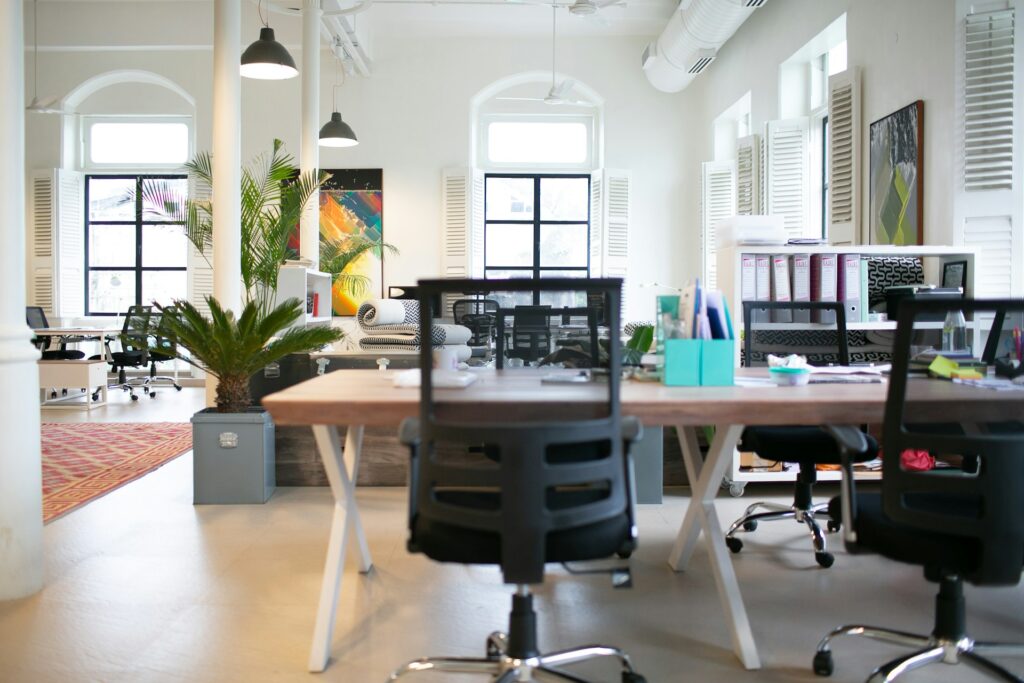
My freelance flow used to die at my desk: bad chair, harsh light, cables everywhere, and a view of a blank wall. Redesigning my workspace was not about aesthetics; it was about removing friction between me and deep work. Here is how I designed a freelance workspace that actually supports my flow.
Ergonomics First in a Freelance Workspace
Nothing kills flow like an aching back. I raised my monitor to eye level, got a chair with real lumbar support, and added a footrest. Boring upgrades, massive payoff. A freelance workspace has to serve your body before it can serve your ideas.
Ambiance That Signals Work Mode
I layered warm lighting: a desk lamp for tasks, soft background light for evenings. Harsh overheads went off during work hours. Ambiance sounds decorative, but in my freelance workspace it functions as a switch: warm light on, brain in work mode.
Organization Systems You Will Actually Use
I ditched complex filing for simple zones: an inbox tray for incoming, a shelf for references, a drawer for tools. The rule is that everything lands somewhere in under ten seconds. A freelance workspace stays tidy only if tidying is nearly effortless.
A Visual Reminder of Purpose
Above my monitor hangs one framed print: the reason I freelance. On hard days it reframes the admin slog. Designing a workspace that supports your freelance flow means designing for motivation, not just efficiency.
More on workspaces: a workspace for slow intentional creativity, transforming my desk into a creativity-first workspace, and solo travel reflections.
