
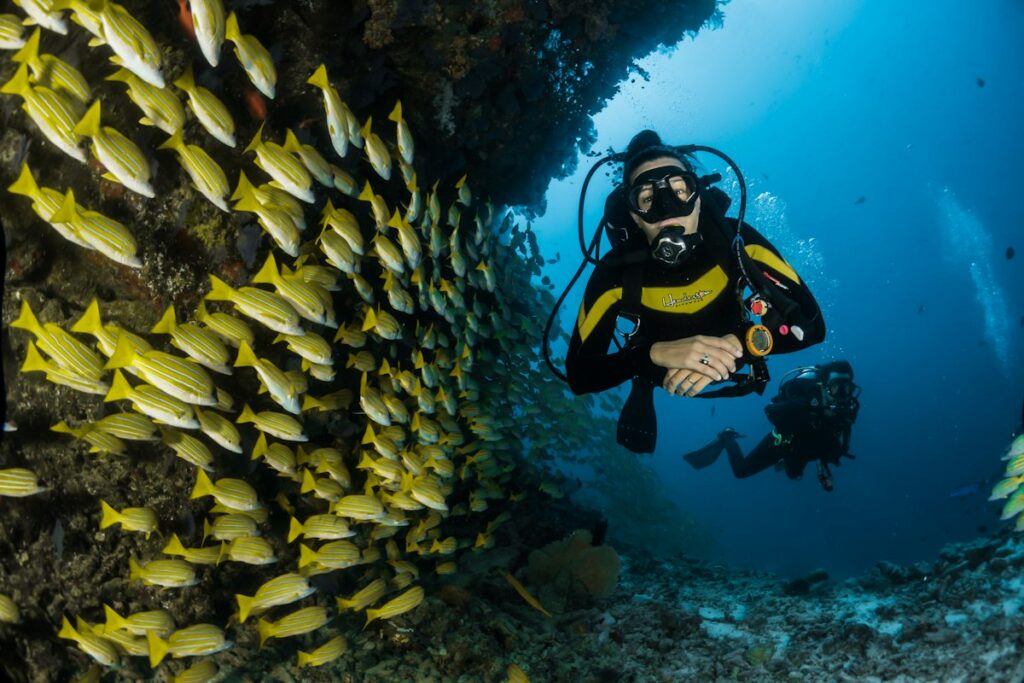
There is a moment every diver remembers with total clarity: the first time you slip beneath the surface and the noisy world above goes quiet. Your breathing slows, the blue deepens around you, and suddenly you are drifting over a coral city busier than any metropolis. The best scuba diving destinations in the world deliver that feeling on repeat, whether you are finning past a WWII wreck, hanging in blue water with schooling hammerheads, or watching manta rays loop overhead like slow-motion birds.
Diving is far more accessible than its adventurous reputation suggests. Open water certification typically takes just three to four days, rental gear is standard everywhere from Sharm El Sheikh to Sipadan, and many of the world’s top dive sites cater specifically to beginners with calm, shallow reefs and patient instructors. You do not need to be an athlete. You need curiosity and a willingness to breathe slowly. This guide covers ten of the best places to scuba dive on the planet, what makes each one special, when to go, and the practical know-how that turns a good dive trip into an unforgettable one.
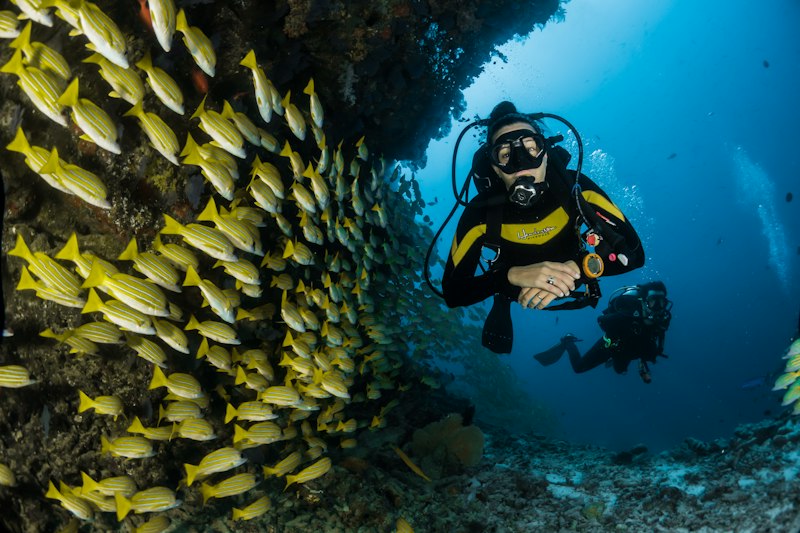
Table of Contents
- 10 Best Scuba Diving Destinations in the World
- Best Places to Scuba Dive: Comparison
- Scuba Diving Trip Guide
- Frequently Asked Questions
- Conclusion
10 Best Scuba Diving Destinations in the World
1. The Great Barrier Reef, Australia
The Great Barrier Reef is the largest living structure on Earth, visible from space and endlessly complex up close. Thousands of individual reefs and islands host an almost incomprehensible diversity of coral, fish, sharks, turtles, and rays. For sheer scale and variety, it remains the benchmark against which all top dive sites in the world are measured.
Liveaboard trips to the outer reef and the Coral Sea deliver the most pristine diving, far from the day-boat crowds. The Yongala wreck, consistently rated among the world’s best wreck dives, teems with giant trevally, sea snakes, and bull sharks. Visit in the dry season for the best visibility and calmest seas, and give yourself plenty of days. The reef is too vast to rush, and its combination of scale, biodiversity, and infrastructure is genuinely unmatched.
2. The Red Sea, Egypt
The Red Sea offers world-class diving at remarkably accessible prices. Legendary sites like Ras Mohammed’s shark reefs, the Thistlegorm wreck’s wartime cargo holds, and the Blue Hole’s dramatic sinkhole deliver experiences that rival far pricier destinations. Coral health here is exceptional, with vibrant hard coral gardens in every color imaginable.
Sharm El Sheikh and Hurghada serve as the main gateways, with liveaboards reaching the most spectacular offshore reefs. The Thistlegorm, a WWII supply ship, is a haunting underwater museum of trucks, motorcycles, and locomotives. With warm water year-round, the Red Sea is one of the most convenient of the world famous scuba diving spots, and few places combine wrecks, reefs, and value this well.
3. Palau, Micronesia
Palau is a diver’s dreamscape of otherworldly sites. Jellyfish Lake lets you snorkel among millions of stingless jellyfish, Blue Corner delivers adrenaline-charged drift diving with sharks patrolling the reef edge, and the WWII wrecks of the lagoon offer haunting history. Palau pioneered marine conservation with its shark sanctuary, and the results show in thriving shark populations.
This is advanced diving country. Strong currents, deep walls, and remote locations demand experience and solid buoyancy control. But the rewards are proportional. Among the top dive sites in the world for seasoned divers, Palau’s combination of unique phenomena and pristine ecosystems is legendary. It is the kind of destination that recalibrates what you believe the ocean can hold.
4. The Maldives
The Maldives are synonymous with tropical perfection above water and equally spectacular below. Channel dives bring encounters with manta rays, whale sharks, and schooling sharks, while coral gardens host turtles and clouds of reef fish. Night dives with feeding mantas under the lights rank among diving’s most magical experiences.
Liveaboards access the best and most remote atolls, though resort-based diving in the central atolls is excellent too. Manta season varies by atoll and monsoon, so time your visit to the cleaning stations’ peak activity. For combining luxury with world-class diving, the Maldives are peerless. It is also one of the best places to learn scuba diving, in warm, calm, impossibly clear water.
5. Raja Ampat, Indonesia
Raja Ampat holds the richest marine biodiversity on Earth, with more coral and fish species than anywhere else. Diving here feels like swimming through an aquarium designed by nature at maximum creativity: pygmy seahorses, wobbegong sharks, manta rays, and coral bommies in explosive color. For marine life enthusiasts, it is the ultimate of the world famous scuba diving spots.
Remoteness is the price of paradise. Reaching Raja Ampat requires commitment, and liveaboards are the best way to dive its scattered sites. The diving suits intermediate to advanced divers, with currents and remote locations to manage. But those who make the journey consistently call it the best diving of their lives. At the pinnacle of biodiversity, Raja Ampat sits in a class of its own.
6. The Galapagos Islands, Ecuador
The Galapagos offer diving unlike anywhere else on the planet: schooling hammerhead sharks in the hundreds, marine iguanas grazing underwater, penguins darting past, and sea lions playfully engaging divers. Darwin and Wolf islands, reached by liveaboard, deliver some of the most thrilling big-animal diving anywhere.
Conditions are genuinely challenging. Cold water, strong currents, and deep dives demand advanced certification and real experience. But the encounters are transformative. Swimming through a wall of hammerheads or playing with sea lion pups creates memories that define diving careers. For big animals, the Galapagos are simply in a class of their own.
7. Sipadan, Malaysia
Sipadan is an oceanic pinnacle rising from the deep, famous for its tornadoes of schooling barracuda and jacks, plus resident turtles in extraordinary numbers. Diving the drop-off walls with the blue abyss beside you is exhilarating, and the sheer density of marine life overwhelms first-time visitors.
Permits are strictly limited to protect the island, so book well ahead through licensed operators. Divers typically stay on nearby islands and boat in daily. Sipadan suits confident divers comfortable with walls and mild currents. Among the best scuba diving destinations in Asia, its combination of schooling-fish spectacles and turtle encounters is unmatched.
8. The Great Blue Hole, Belize
Belize’s Great Blue Hole is diving’s most famous sinkhole: a perfectly circular marine cavern over 400 feet deep, ringed by coral reef. Descending past giant stalactites into the deep blue is a surreal experience found nowhere else. The surrounding Lighthouse Reef offers superb wall diving, and nearby Turneffe Atoll adds pristine coral gardens.
The Blue Hole itself is a deep, short dive best suited to experienced divers comfortable with depth. But Belize diving extends far beyond it. The barrier reef, the second largest in the world, offers excellent diving for all levels. The Blue Hole’s iconic status makes it a bucket-list essential, and Belize’s warm, clear water welcomes divers of every level.
9. Komodo National Park, Indonesia
Komodo pairs world-class diving with the chance to see its famous dragons ashore. The diving is thrilling: manta ray cleaning stations, current-swept coral gardens, and sites like Batu Bolong where fish density defies belief. The park’s position between the Pacific and Indian Oceans creates nutrient-rich waters that feed extraordinary marine life.
Currents here are serious and demand respect. Komodo is best for intermediate to advanced divers with good air consumption and buoyancy. Liveaboards offer the full experience, combining diving with dragon encounters and pink sand beaches. For adventure diving, Komodo delivers the complete Indonesian package of big animals, coral, and topside wonders.
10. The Similan Islands, Thailand
The Similan Islands offer Thailand’s finest diving: granite boulder landscapes draped in soft coral, clear water, and encounters with manta rays and whale sharks in season. The islands’ national park status keeps the reefs healthy, and the boulder formations create swim-throughs and caverns that delight photographers.
Liveaboards during the November to May season access the best sites, including the famous Richelieu Rock with its whale shark encounters. The Similans are among the best places to learn scuba diving at the advanced level, with conditions that build skills while delivering spectacular marine life. For accessible world-class diving in Southeast Asia, the Similans are essential.
Best Places to Scuba Dive: Comparison
Compare all ten of these scuba diving destinations side by side to find the underwater adventure that fits your certification level and your dreams.
Scuba Diving Destinations: At-a-Glance Comparison
| Destination | Best For | Signature Experience | Diver Level |
|---|---|---|---|
| Great Barrier Reef | Biodiversity | Vast coral ecosystems | All levels |
| Red Sea | Wrecks and value | Thistlegorm wreck | All levels |
| Palau | Unique phenomena | Jellyfish Lake, Blue Corner | Advanced |
| Maldives | Luxury plus mantas | Manta night dives | All levels |
| Raja Ampat | Marine biodiversity | Richest reefs on Earth | Intermediate plus |
| Galapagos | Big animals | Schooling hammerheads | Advanced |
| Sipadan | Schooling fish | Barracuda tornadoes | Intermediate plus |
| Great Blue Hole, Belize | Iconic dive | Deep blue sinkhole | Advanced |
| Komodo | Adventure diving | Mantas and dragons | Intermediate plus |
| Similan Islands | Accessible excellence | Boulder reefs | All levels |
Scuba Diving Trip Guide
Getting Certified: Your Path Underwater
Open water certification is the entry ticket to the best places to scuba dive, and it typically takes three to four days combining theory, pool sessions, and open water dives. Choose a reputable dive center with small class sizes and patient instructors. The quality of your initial training shapes your comfort for years, so this is not the place to chase the cheapest deal.
After certification, build experience gradually. Log dives in easy conditions before attempting advanced destinations with currents and depth. Advanced and specialty courses in deep diving, wreck diving, and nitrox open up more of the world’s top dive sites. Each new certification reaches destinations that were previously beyond you, and the learning curve is one of diving’s great pleasures.
When to Dive: Seasonality Matters
Every destination has an optimal season balancing visibility, sea conditions, and marine life encounters. The Similans close in monsoon season and shine from November to May, the Red Sea dives year-round, and manta aggregations follow plankton blooms that shift with the months. Research your target destination’s seasons before booking flights. Timing often matters as much as location for the experience of a lifetime.
Liveaboard Versus Resort Diving
Liveaboards, dive boats you sleep on, access the most remote and pristine sites and maximize your dives per day. Resort-based diving offers comfort, flexibility, and topside activities for non-diving companions. For far-flung destinations like Raja Ampat or the Galapagos, liveaboards are essentially mandatory. For the Red Sea or Maldives, both options excel. Choose based on your budget, travel style, and how dive-focused your trip is.
Dive Safety Essentials
Never dive beyond your training and experience. Check your equipment before every dive, plan your dive and dive your plan, and always dive with a buddy. Stay hydrated, avoid alcohol before diving, and respect no-fly times after your last dive. Dive insurance covering hyperbaric treatment is essential for international trips. The best scuba diving destinations are safest for divers who treat safety as a habit rather than an afterthought.
Protecting the Reefs You Love
Divers are ocean ambassadors. Perfect your buoyancy to avoid touching coral, never chase or harass marine life, and choose operators with strong environmental practices. Support marine protected areas through park fees that fund conservation. The top dive sites in the world stay spectacular because divers and operators protect them. Leave only bubbles, take only photographs, and the reefs will thrive for the next generation. If you love the surface too, our guide to the best snorkeling spots around the world pairs nicely with this one, and wildlife safaris and parks offer the land-based counterpart to these underwater adventures. Planning a California coast trip? Don’t miss the best whale watching spots in California.
Frequently Asked Questions About the Best Scuba Diving Destinations
What are the best scuba diving destinations for beginners?
The Maldives, Thailand’s Similan Islands, Belize’s barrier reef, and the Red Sea offer warm, clear, calm conditions ideal for new divers. These best places to learn scuba diving combine gentle conditions with spectacular marine life, so beginners enjoy world-class diving while building skills. Choose destinations with reputable dive centers and patient instructors, and you’ll be amazed how quickly your confidence grows.
What are the top dive sites in the world for experienced divers?
Palau’s Blue Corner, the Galapagos’ Darwin and Wolf, Komodo’s current-swept reefs, and Raja Ampat’s biodiversity hotspots challenge and reward advanced divers. These top dive sites demand strong buoyancy, current experience, and deep-diving comfort. The encounters, from schooling hammerheads to manta aggregations, justify every bit of the skill requirement.
How long does it take to get scuba certified?
Open water certification typically takes three to four days, combining online or classroom theory, confined water training, and four open water dives. Many tropical resorts offer courses that fit comfortably into a vacation week. The best places to learn scuba diving offer warm, clear water that makes training comfortable and enjoyable rather than stressful.
What is the best time of year for diving?
It depends entirely on the destination. The Similans are best November through May, the Red Sea dives well year-round, and manta seasons vary by location. Research your specific destination’s optimal months for visibility, calm seas, and target species. Each of the world famous scuba diving spots has its prime window worth planning around.
Is scuba diving safe?
Recreational scuba diving with proper training, well-maintained equipment, and conservative dive practices has an excellent safety record. Complete a reputable certification, dive within your limits, follow your training, and use a dive computer. As with any adventure sport, risk exists but is well managed through education and discipline.
What should I pack for a dive trip?
Bring your certification card, logbook, mask, and dive computer if you own them, plus reef-safe sunscreen and a rash guard for sun and sting protection. Most destinations rent quality BCDs, regulators, and wetsuits. Pack your dive insurance documentation and leave room for the memories. The best scuba diving destinations handle the heavy gear; you bring the essentials and the excitement.
Conclusion
The best places to scuba dive in the world offer access to Earth’s last great wilderness: a realm of coral cities, gentle giants, and silent beauty that transforms everyone who visits. Whether you choose the Great Barrier Reef’s vastness, Palau’s wonders, the Galapagos’ big animals, or the Red Sea’s wrecks, the formula for an unforgettable trip is the same. Get certified well, choose the right season, dive with reputable operators, and respect the ocean that hosts you. The underwater world is waiting, and it will change how you see everything above the surface too. For deeper data on marine ecosystems, see the experts at NOAA and PADI.

3 thoughts on “10 Best Places to Scuba Dive in the World for Unforgettable Underwater Adventures”